
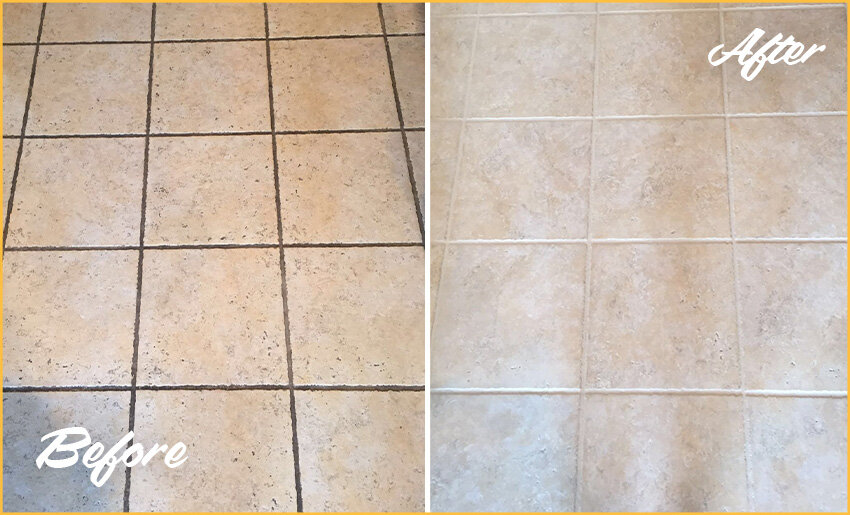
Short answer: not always required, but almost always worth considering. Sealing doesn't replace cleaning — it protects the results of cleaning, which is a different job entirely.
What Sealing Actually Does
Grout is porous, which is exactly why it gets dirty in the first place — soil, grease and moisture soak into the material rather than sitting on top of it. A sealant fills in that porosity, at least partially, so future spills and everyday soil have a harder time working their way in. It's a protective layer, not a cleaning product.
That means sealing grout that's still dirty just traps the soil underneath the seal. Cleaning has to come first. Sealing is what you do after the grout is actually clean, to help keep it that way longer.
Does Every Floor Need It?
Not necessarily. A few things affect whether sealing makes sense for your specific floor:
- Traffic level: high-traffic areas like kitchens and entryways benefit more from sealing than a rarely used guest bathroom.
- Grout type: some grout is manufactured with built-in stain resistance and needs sealing less urgently than traditional cementitious grout.
- Prior sealing history: if your grout has never been sealed, or it's been several years, a fresh deep clean is a natural time to add it.
- How the grout currently looks: unsealed grout in a humid climate — which describes most of Southeast Houston for a good part of the year — tends to re-soil faster than the same grout somewhere drier.
How Long Does Sealant Actually Last?
It varies by product and traffic, but as a general guideline, sealant in a moderately used area often needs to be refreshed every year or two. High-traffic kitchens may need it sooner; a low-traffic formal space might go longer. We don't sell sealing as a one-time permanent fix, because it isn't one — it's ongoing protection, not a permanent seal.
Sealing vs. Color Sealing
Standard sealant is typically clear or near-invisible — it protects the grout's existing color. Color sealing goes a step further by applying a fresh, consistent color across every grout line, which is especially useful when grout has darkened unevenly over years of wear. If your grout looks blotchy or inconsistent rather than uniformly dirty, color sealing might be the more useful conversation to have. We cover that difference in more detail in our article on grout color sealing.
What the Sealing Process Actually Involves
Sealing is applied after the grout has been fully cleaned and allowed to dry — applying it to damp grout can trap moisture underneath, which defeats the purpose. The sealant is worked into each grout line and given time to cure before the floor sees normal foot traffic again. It's a relatively quick add-on compared to the cleaning itself, which is part of why it's worth considering as part of the same visit rather than scheduling it separately later.
Common Misconceptions About Sealing
- "Sealing means I never have to clean again." Not true — sealing slows re-soiling, it doesn't eliminate the need for regular maintenance or future deep cleaning.
- "All sealants are the same." They vary in durability and finish; the right choice depends on the grout type and how the space is used.
- "Sealing will change how my floor looks." Standard sealant is typically near-invisible — if you want a visible color change or more uniform look, that's what color sealing is for instead.
Humidity and Sealing in Southeast Houston Homes
Because humidity here tends to run higher for a good part of the year, unsealed grout in kitchens and bathrooms often shows staining sooner than it would in a drier region. That doesn't mean every floor needs sealing immediately, but it's a genuine factor worth weighing when deciding whether to add it to your next cleaning.
Signs Your Grout Sealant Has Worn Off
Sealant doesn't announce its own expiration. The clearest sign is behavioral rather than visual: water that used to bead up on the grout surface starts soaking in instead, or spills that used to wipe away cleanly start leaving faint marks. If you're not sure whether your grout is currently sealed, that's a reasonable thing to ask us to check during a cleaning visit rather than guess.
Need Professional Tile & Grout Cleaning in Pasadena, TX?
We can tell you honestly whether sealing makes sense for your specific grout during your estimate — not every floor needs it, and we'd rather say so than upsell a service you don't. Learn more about our tile and grout cleaning process or request a free estimate.