
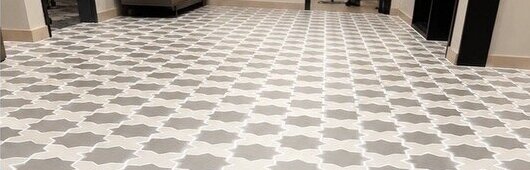
Black grout is one of the most common concerns we hear about, and it's rarely as simple as "it just needs a mop." Here's what's typically going on.
Grout Is Porous — That's the Root of the Problem
Unlike the glazed surface of most tile, grout is porous. That texture is great for adhesion during installation, but it also means grout absorbs moisture, oils and fine particles instead of letting them sit on top where a mop can reach them.
The Usual Suspects
- Everyday soil buildup: dirt and grime tracked in over months or years, worked deeper into the grout with every mopping pass.
- Moisture exposure: kitchens, bathrooms and entryways near Houston's humidity see more moisture cycling through grout, which can encourage discoloration over time.
- Failed or missing sealant: sealant is meant to slow how quickly grout absorbs soil and moisture. Once it wears down, grout darkens faster.
- Mopping with dirty water: ironically, mopping with a soiled mop head can push more grime into grout lines than it removes.
Is It Mold?
Sometimes darkened grout is soil, and sometimes it's mold or mildew — particularly in consistently damp areas like shower grout. If you suspect mold rather than soil buildup, that's worth having evaluated directly; we don't perform mold remediation, but we can help you understand what you're looking at and point you to next steps if it's beyond standard cleaning.
What Actually Helps
For soil-based discoloration, professional extraction cleaning lifts embedded grime out of the grout rather than just scrubbing the surface. Once clean, sealing (or color sealing, for a more uniform, protected finish) helps slow how quickly it darkens again.
Professional agitation equipment working a cleaning solution into grout before extraction — this is what actually loosens embedded soil that scrubbing alone can't reach.
What Doesn't Help Much
Harsh scrubbing with abrasive tools can wear down grout over time without solving the underlying porosity issue. Bleach-based products can lighten grout temporarily but don't address soil trapped deeper in the material, and can be hard on nearby surfaces.