
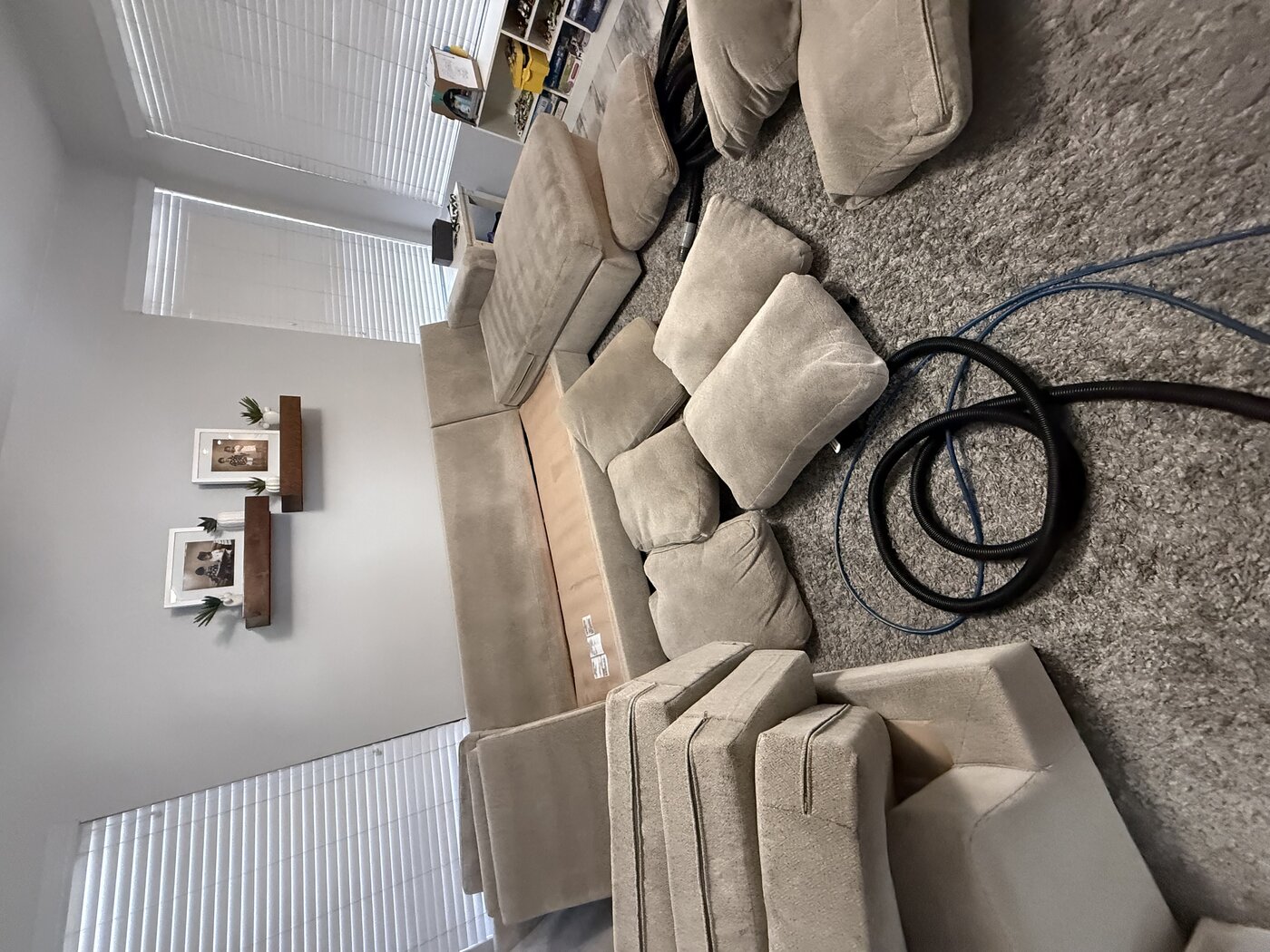
Carpet gets vacuumed weekly. Upholstered furniture, in most homes, gets cleaned a lot less often than that — sometimes not at all until it visibly needs it. Here's a more useful way to think about the schedule.
A Reasonable Baseline
For an average household, professional upholstery cleaning roughly every 12 to 18 months is a sensible starting point. That's not a strict rule, but it accounts for how gradually upholstery soils compared to something like a kitchen floor — the buildup is slow and easy to miss day to day.
What Shortens That Interval
- Pets on the furniture. Oils, dander and shedding accumulate faster than most people realize.
- Daily heavy use. A couch that's the default seat for the whole household every evening soils faster than a rarely used formal sofa.
- Kids. Spills, snacks and general wear add up.
- Light-colored fabric. Not dirtier, technically, but soiling shows sooner and more visibly.
What Happens If You Wait Too Long
Upholstery absorbs body oils, dust and everyday residue the same way carpet does, just more slowly and less obviously. Left long enough, that buildup shows up as dulled fabric color, a flattened texture, and a general "tired" look that no amount of surface wiping fixes — because the buildup isn't on the surface anymore, it's worked into the fibers and padding underneath.
The fix at that point is the same either way — professional cleaning — but the results are usually more dramatic (and sometimes take a bit more work) the longer it's been put off.
Signs It's Time, Regardless of the Calendar
- Fabric that looks dull or feels different in high-contact areas like armrests and cushion tops.
- A faint odor that doesn't improve with normal airing out.
- Visible spots that have been there long enough you've stopped noticing them.
Not Every Fabric Is the Same
Before cleaning any piece, we evaluate the fabric type and construction, since results and the safe cleaning method depend heavily on the material. We're upfront if a piece isn't a good candidate for our process rather than risk the fabric — this matters more for upholstery than almost any other service we offer, since furniture fabrics vary so much more than, say, tile does.
What a Professional Appointment Looks Like
We start by evaluating the fabric type and construction, since not every material responds to the same cleaning approach. From there, visible spots get pre-treated before the full piece is cleaned using a method suited to that specific fabric. We aim to leave furniture as dry as practical, and we'll give you realistic guidance on when it's safe to sit on again — usually a matter of hours, though it varies by fabric and how much cleaning was needed.
Protecting Furniture Between Cleanings
- Vacuum upholstery periodically with a brush attachment to remove loose debris before it works into the fabric.
- Rotate cushions if they're reversible, to even out wear and soiling.
- Address spills immediately with a light blot — never a hard scrub, which can push liquid deeper into the cushion.
- Keep pets off furniture where possible, or use a washable throw in their favorite spot.
Commercial Upholstery Has Its Own Considerations
A Simple Test for When It's Time
Run your hand across a high-contact area like an armrest or cushion top. If it feels noticeably different in texture or color compared to a less-used section of the same piece, that's usually a reliable, low-effort sign it's time for a cleaning — often before the difference is obvious just by looking.
Waiting rooms, lobby seating and other commercial upholstery see far more daily contact than residential furniture, which usually means a shorter, more frequent cleaning interval makes sense. If you manage a commercial property, our commercial upholstery cleaning service covers this on a schedule built around your traffic rather than a residential timeline.
Need Upholstery Cleaning in Pasadena, TX?
If your couch or sectional is overdue, we're happy to take a look and give you an honest assessment. See our full upholstery cleaning service or request a free estimate.