
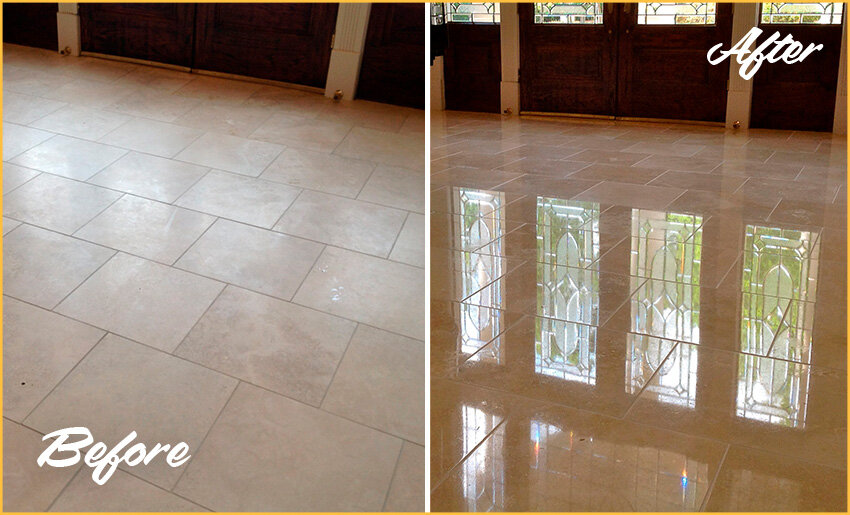
Natural stone floors are beautiful, and they're also more reactive than most homeowners realize. A lot of well-intentioned care routines that work fine on tile can actually dull or damage natural stone over time.
Why Natural Stone Is Different From Tile
Ceramic and porcelain tile have a glazed, largely non-reactive surface. Marble, travertine and limestone are calcium-based and genuinely reactive — acidic substances like citrus juice, wine, vinegar and even some all-purpose cleaners can etch the surface, leaving a dull mark rather than a stain you can simply wipe away. This is one of the most common ways stone floors get damaged, often by people who are trying to clean them carefully with the wrong product.
Daily and Weekly Care That Actually Helps
- Sweep or dust-mop regularly. Grit tracked in on shoes acts like sandpaper on stone over time, so removing it before it's ground in matters more than people expect.
- Use a pH-neutral stone cleaner, not an all-purpose one. Standard household cleaners are often too acidic or alkaline for natural stone.
- Wipe up spills promptly, especially anything acidic — wine, coffee, citrus, tomato-based foods.
- Use mats at entryways to reduce the amount of grit that makes it onto the stone in the first place.
What to Avoid
- Vinegar-based cleaners, which are popular for general home cleaning but are genuinely harmful to natural stone.
- Abrasive scrub pads or powders, which can scratch the surface.
- Generic "multi-surface" cleaners that aren't specifically labeled safe for natural stone.
Marble vs. Travertine: Similar Care, Different Sensitivity
Marble and travertine are both calcium-based and share the same core vulnerabilities, but travertine's naturally porous, pitted texture means it often needs more frequent sealing to stay protected, while marble's denser surface tends to show etching and scratching more visibly. Neither should be treated identically to granite, which is significantly more chemical- and scratch-resistant.
Real footage of professional stone-look floor cleaning in progress.
When Cleaning Alone Isn't Enough
Over time, even well-maintained stone floors can lose their original shine from gradual wear, or develop visible etching from an accidental spill that wasn't caught right away. That's the point where professional honing and polishing come in — honing levels out physical wear and etch marks using progressively finer abrasives, and polishing restores the final shine. It's a different service than routine cleaning, aimed at the finish itself rather than what's sitting on top of it.
A Practical Sealing Reminder
Most natural stone floors benefit from resealing periodically — how often depends on the specific stone, its porosity, and how much traffic it sees. If it's been a couple of years since your floor was last sealed, that's a reasonable prompt to have it checked.
Limestone: The Often-Overlooked Third Option
Limestone shares marble and travertine's calcium-based sensitivity to acids, but it tends to be softer and more porous than both, which means it scratches and stains more easily if not properly sealed and maintained. If your home has limestone flooring or countertops, the same acid-avoidance and pH-neutral cleaner guidance applies, generally with even more caution around abrasive tools.
Signs Your Stone Floor Is Ready for Professional Attention
- A visible dull or hazy patch that doesn't respond to normal cleaning.
- Etch marks from a spill that wasn't caught in time.
- Fine scratches concentrated in high-traffic paths.
- An uneven or patchy shine across an otherwise consistent floor.
None of these are emergencies, but they're all reasonable prompts to have the floor evaluated before the issue becomes more noticeable — or more costly — to correct.
Countertops Follow the Same Rules
A Simple Long-Term Habit
The single habit that protects natural stone more than any product: wipe up spills as they happen rather than letting them sit, even briefly. Most etching and staining incidents trace back to a spill that sat for twenty minutes instead of two, not a single dramatic accident.
Everything here applies just as much to natural stone countertops as it does to floors — the same acid sensitivity, the same need for pH-neutral cleaners, and the same benefit from periodic sealing. Kitchen countertops in particular face more daily acid exposure than most floors, from citrus, wine and cooking, which makes prompt spill cleanup even more worth the habit.
Need Natural Stone Care in Pasadena, TX?
See our full stone polishing service or request a free estimate if your natural stone floor has lost its shine or developed etching.